


During the 1848 California Gold Rush, the most durable fortunes belonged not to the miners, but to those selling the picks, shovels, and blue jeans. Merchants like Levi Strauss succeeded because they stopped looking for gold and instead asked: What does everyone digging for gold need in order to dig? Today, Artificial Intelligence is our new Gold Rush. As tech giants prepare to spend an unprecedented $820 billion on capital expenditures, most investors are trying to guess which software platform will win. I believe that is the wrong question. The right question is simpler: What do all of these tech giants need in order to compete?
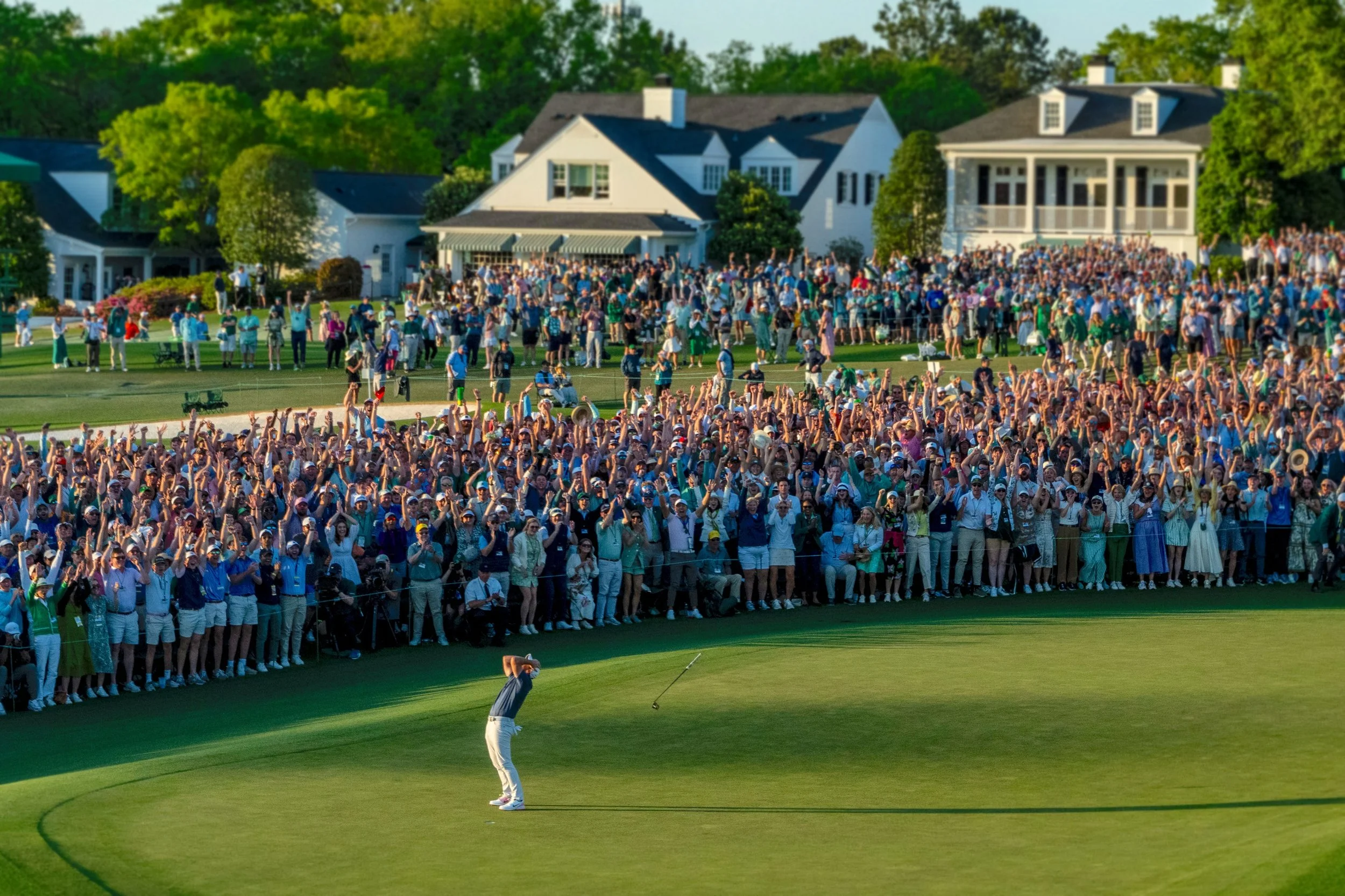
It’s a struggle picking the entry point for this quarter’s commentary: politics, the global economy, or the irony of current blockades in the Strait of Hormuz? We could even discuss the role of the Pope. But instead, I’d like to reference golf. Because everyone enjoys talking golf - and specifically, The Masters. The Masters (having just concluded on Sunday) is one of four major golf tournaments held each year. Unlike the others, it is played at the same place every spring: Augusta National Golf Club. In a world of short attention spans, fleeting fads, and the relentless drive to maximize immediate profits, The Masters is an incredible outlier.

now, and it can often feel like the "old rules" are being rewritten. In the commentary that follows, our Portfolio Manager, Nick, dives into the concept of a "regime change" in the global economy. While the term sounds heavy, I wanted to share why Nick and I actually feel a great deal of confidence - and even optimism - about how we are positioned for what lies ahead.
Nick points out that many investors are currently getting "all the right answers to all the wrong questions". They are clinging to a traditional 40-year-old playbook that may no longer be equipped for today's reality. Because we have anticipated these shifts, we aren’t reacting to the news; we are executing a plan. Our strategy remains rooted in the timeless foundation of Value Investing, but with a modern lens on protection:

It’s been a wild rollercoaster of a year so far. With plenty of ups and downs: never ending risk on, risk off. Markets are booming one minute and burning the next. But underlying all the noise, we do see a couple key themes to be mindful of that are driving our positioning…

My son Christopher recently returned from a week at the Steens Mountain Running Camp, a place known for forging both exceptional athletes and resilient young adults. Day two is infamously known as the "Big Day:" a grueling 28-mile trail run that snakes its way up and down the rugged, breathtaking Steens Mountain. It's a daunting physical and mental challenge that demands everything a person has.
As I listened to him recount the endless switchbacks and the sheer perseverance required, it struck me how much this mirrors our current investment landscape. Whether you're navigating a winding mountain trail or a volatile market, success isn’t about a single burst of speed. It requires a clear focus, immense patience, and the wisdom to surround yourself with smart, reasonable, and determined individuals who can help you push through the hard times. This year, more than ever, we've relied on that very same approach. It's a philosophy that has guided us through the market's noise and complexity, and it's what has enabled us to protect and grow your wealth.

From the very founding of this firm, we believed that we were uniquely prepared to embrace volatility, identify opportunities, and be strategic and calm in the face of chaos (obligatory and heart-felt thank you to our parents). To be clear, there are lots of things that we worry about (tech valuations and a possible recession). And plenty of things are outside of our control (clear and cogent policies so businesses can plan accordingly). But what we aren’t worried about are our clients’ long-term portfolios.
We view managing risk in investment portfolios as one of our key responsibilities. And this is one of the most challenging investment landscapes that we have ever seen.

On August 5th, the Japanese stock market declined by 12% in a single day and the next day it increased by 10%. There is no possible way that Japanese businesses were worth 12% less on one day and 10% more the following day. Academics and the wall street money machine would have us believe that “markets are efficient.” The prospects of this theory are as absurd today as when Benjamin Graham wrote his seminal work on value investing, The Intelligent Investor.
2024 marks the 75th anniversary of the prescriptive investment wisdom by the late Benjamin Graham. After his own father - Warren Buffet considers Benjamin Graham the second most important person in his life, saying "He embodied what Walt Whitman described as, ‘Men who plant trees that other men will sit under.’ ”

Long in the making, my family explored Paris, the French countryside and the Normandy region in June and July. As I was reflecting on our trip during the flight home, I took note of what made our trip such a success: the inherent uncertainty of travel, excitement for the unknown, thorough preparations, a curiosity and thirst for growth, flexibility to adapt, and an optimistic attitude that no matter what we encountered, we can thrive.
In reviewing our current allocations and positioning, it is not lost on me that these same traits are guiding our investment decisions. As Nick writes in this quarter’s newsletter, despite economic and political volatility and all the associated unknowns, we feel very, very good about our current strategy.

Over the last couple months we have seen many analyst reports calling for a reemergence in the growth of earnings and generally an upbeat/bullish outlook for the economy and stocks. The narrative goes: The Fed has finished hiking interest rates, and it will soon lower the fed funds rate creating a stimulative impact on the economy and market. The market has celebrated this narrative with many calling for a “soft landing” and pricing in as many as 5 Fed rate cuts. As a result, many market analysts are “all in.” Some of those young folks have proclaimed a generational buying opportunity. We couldn’t disagree more with this outlook.

From our founding days at Pilot Wealth Management, we have been consistently and unabashedly value investors. We like to buy things that are undervalued by fundamental measures and ideally aligned with principled people who steward their investors capital as if it were their own. With any investment style, there are times when it has “underperformed” and there are times when it has “outperformed” the market averages. The performance of the “60/40” traditional portfolio’s performance has been abysmal of late. This is not the case with the portfolios we have assembled for you. Since the S&P 500 peaked at the end of 2021, our largest holdings have certainly outperformed.