
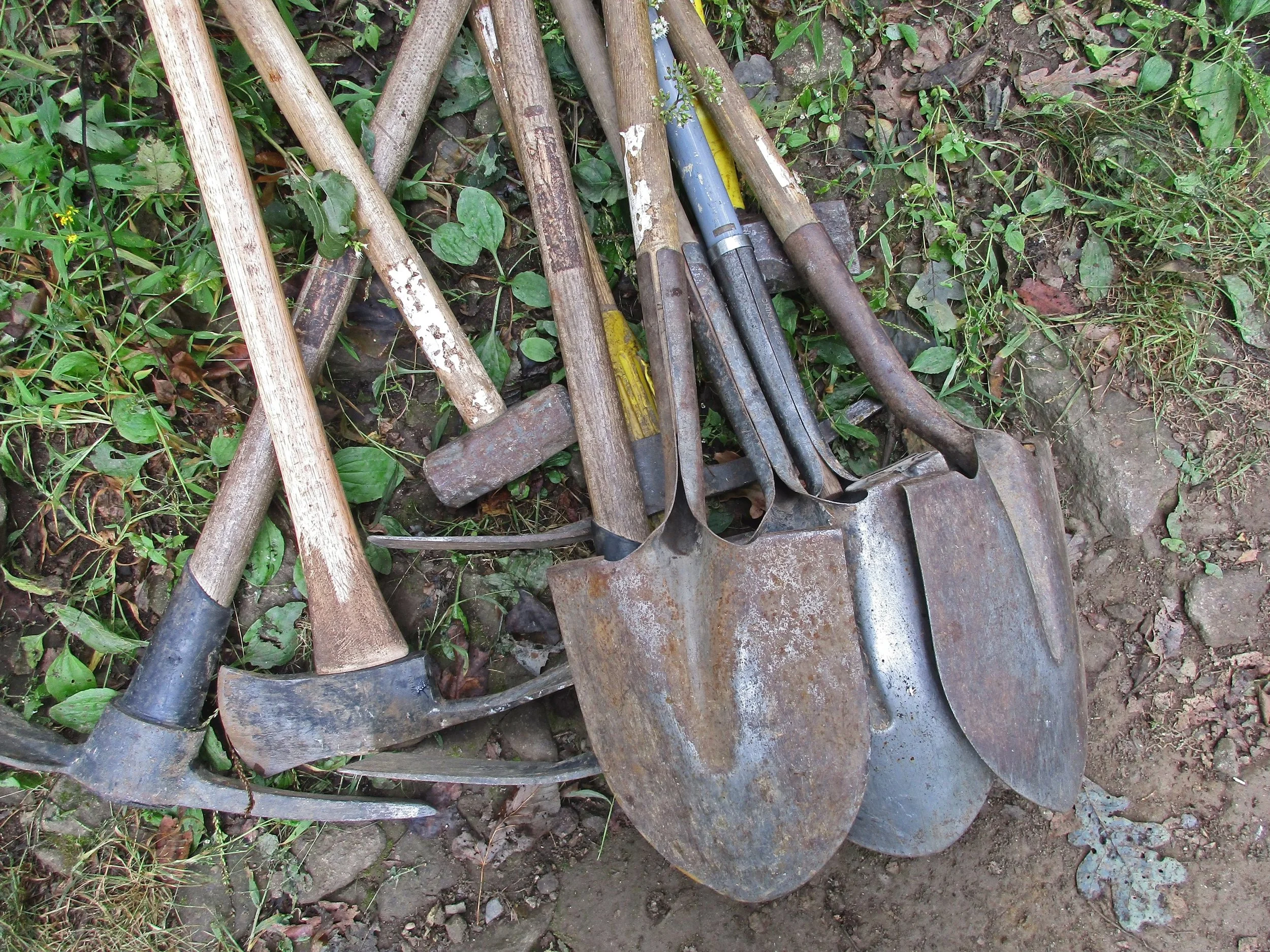
During the 1848 California Gold Rush, the most durable fortunes belonged not to the miners, but to those selling the picks, shovels, and blue jeans. Merchants like Levi Strauss succeeded because they stopped looking for gold and instead asked: What does everyone digging for gold need in order to dig?
Today, Artificial Intelligence is our new Gold Rush. As tech giants prepare to spend an unprecedented $820 billion on capital expenditures, most investors are trying to guess which software platform will win. I believe that is the wrong question. The right question is simpler: What do all of these tech giants need in order to compete?
The answer lies entirely in the physical world. As commodity strategist Jeffrey Currie recently framed it, nearly $400 billion will go directly into buying energy and materials for data centers and the related equipment. The tech sector represents a massive, unhedged "bid" for molecules, electrons, copper, and concrete. On the other side of this trade sits what Currie calls the "Munificent 7" These overly generous investments include the materials and energy names that have been underinvested for more than a decade.
For the past decade, capital has flooded the "2D" digital economy while starving the "3D" world of infrastructure. Consequently, materials and energy have shrunk to a tiny fraction of the S&P 500, while technology has swelled to over a third of the index. Yet, the AI boom clarifies a stark reality: the digital world is entirely dependent on the physical world it neglected.
This has created one of the most asymmetric trades in history. While the Magnificent 7 trades at premium valuations with a meager 1.5% free cash flow yield, the "Munificent 7" are generating yields closer to 15.5% - all at the exact moment supply is severely constrained by a decade of underinvestment.
No one knows which AI model, application, or agent will ultimately dominate. But we know with certainty that they will all require an immense amount of power and infrastructure to survive. The modern shovels are still available, and they are mispriced.
By Jason Lesh, Managing Principal

In 1848, gold was discovered at Sutter’s Mill in California. Within two years, more than 300,000 people had flooded into the state. The Gold Rush is remembered as one of the great wealth-creation events in American history - and it was, just not for most of the miners.
The people who got reliably rich were the ones selling picks, shovels, and blue jeans. Levi Strauss didn’t pan for gold. He sold durable trousers to the people who did. Samuel Brannan, California’s first millionaire, didn’t mine an ounce. He bought up every shovel in San Francisco before announcing the discovery and sold them back to prospectors at a 1,000% markup. The most durable fortunes of the Gold Rush belonged to those who asked a different question - not “where is the gold?” but “what does everyone digging for gold need in order to dig?”
We are living through a new Gold Rush. Its name is Artificial Intelligence.
This year alone, the world’s largest technology companies will spend approximately $800 billion building out the infrastructure that AI requires. Data centers, power plants, fiber networks, cooling systems, semiconductor fabrication facilities. The race to dominate AI is real, urgent, and extraordinarily capital-intensive. Every major institution on earth is asking the same question: which company will win?
We think that is the wrong question.
The right question - the one that guided the shrewdest investors of 1848 - is simpler: what does everyone building AI need in order to build it?
The answer is not software. It is not algorithms. It is copper, power, land, and steel. It is the physical world.
In our Q1 commentary, Nick introduced the framework we have been using to navigate this environment: the world is dividing into a “2D” economy of screens, software, and digital engagement, and a “3D” economy of atoms, energy, metals, and infrastructure. For the last decade, capital has flooded into the 2D world and abandoned the 3D world. The result is that materials represent just 1.7% of the S&P 500 today, and energy just 2.9% - down from 6% and 12% in 1990. Meanwhile, technology has grown to 34%.
What the AI moment clarifies is this: the 2D world is now entirely dependent on the 3D world it neglected.
You cannot run a large language model without power. You cannot build a data center without copper wiring and steel. You cannot manufacture a chip without rare earth elements, water, and land. The more powerful AI becomes, the more physical resources it consumes. The $800 billion being deployed this year is not going into ether - it is going into the ground, into the grid, into the infrastructure of the physical world.
We do not know which AI company will win. Nobody does. But we know, with considerably more confidence, what they will all need in order to compete. And we know that those inputs - copper, energy, land, infrastructure - are in increasingly short supply after a decade of underinvestment.
The shovels are still available. We are buying them.

By Nick Fisher, Portfolio Manager

History does not repeat itself, but it does, as the saying goes, rhyme.
The current AI investment cycle bears a striking resemblance to the technology and telecommunications buildout of the late 1990s. Between 1995 and 2000, U.S. companies invested an extraordinary amount of capital into the infrastructure of the internet - fiber optic cable, server farms, network hardware. Much of that investment was wildly speculative. Hundreds of companies that received that capital no longer exist.
But here is the part of the story that most investors forget: the technology capex cycle did not peak when the NASDAQ peaked. Markets topped in March 2000. The S&P 500 followed later that year. But capital expenditure on technology infrastructure kept climbing - peaking in 2002 and 2003, well after equity markets had collapsed. The buildout continued even as the companies funding it went bankrupt.
And the companies that supplied the physical inputs to that buildout - the wire manufacturers, the power companies, the real estate owners who held the land beneath the data centers - quietly compounded through a period that devastated the investors chasing the headline names.
We believe we are in an earlier stage of a similar cycle today.
The $800 billion in AI-related capital expenditure projected for this year represents the largest single-year technology investment in human history. It is, by any measure, a genuine industrial mobilization. And like all industrial mobilizations, it requires physical inputs on a scale the market has not yet priced.
Consider what it actually takes to run AI at scale. A single large AI training run consumes more electricity than many small countries use in a year. The data centers required to house these models demand enormous quantities of copper for wiring, vast amounts of water for cooling, and reliable, always-on power - which means natural gas, nuclear, and hydroelectric, not intermittent renewables alone. The chips themselves require dozens of rare materials mined from a handful of locations globally.
We have spent nearly a decade watching capital flee these sectors. The commodity supercycle that peaked in 2011 sent investors running. Mining companies cut exploration budgets. Energy producers stopped drilling. Infrastructure investment stagnated. The result is a supply base that has not grown in fifteen years — now being asked to serve a demand surge that is just beginning.
There is an additional dynamic worth noting. The AI investment cycle introduces something that the 1990s tech cycle did not: acute obsolescence risk for software business models. When AI can replicate the core function of a software product at near-zero marginal cost, the pricing power that drove software multiples evaporates. The companies most exposed to this disruption are precisely those trading at the highest valuations today. The companies least exposed — those whose value derives from physical scarcity rather than digital leverage - are trading at the lowest valuations in a generation.
We are not anti-technology. We use these tools every day, and we believe AI will create enormous value. But in the face of genuine uncertainty about which platforms win the AI race, we prefer to own what all of them need to run. Those assets are scarce, undervalued, and increasingly essential.
The shovels, in our view, remain the better trade.
